FIRE SAFETY FOR ACOUSTIC PANELS
When it comes to improving room acoustics, design and sound quality are often prioritised. However, fire safety is a critical factor that should never be overlooked. Depending on where the panels are used — whether in a home studio or in a public building — there may be different legal requirements that apply.
This guide explains the key standards, classifications, and other things to consider when planning for your room’s acoustics.
Why is Fire Safety Critical for Acoustic Panels?
Acoustic panels are often made from materials that are flammable unless properly treated. In the event of a fire, the fire rating determines how quickly flames spread and the volume of smoke produced.
In Europe and Germany, two primary standards apply:
1. DIN 4102: This is the traditional German standard that applies to older building and construction materials.
2. DIN EN 13501: The current European standard, which applies to all newly certified building materials.
Understanding the Classifications
1. The German Standard (DIN 4102)
Materials are categorised into different tiers, ranging from “non-combustible” to “highly flammable”:
| Class | Flammability | Examples |
|---|---|---|
| A1 / A2 | Non-combustible | Concrete, brick, glass wool |
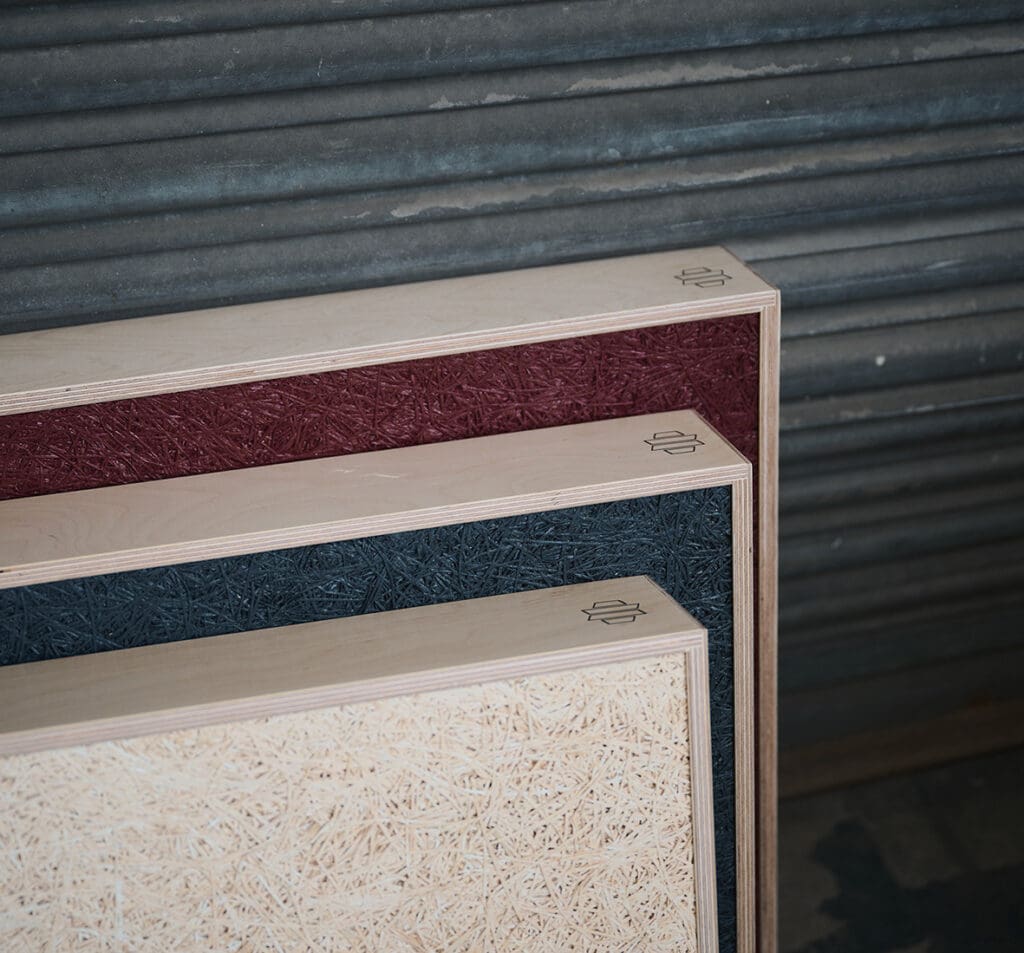
| B1 | Flame-retardant | Perforated plasterboard, wood wool |
| B2 | Normal flammability | Wood-based materials |
| B3 | Highly flammable | Paper, polystyrene |
2. The European Standard (DIN EN 13501)
This standard is more detailed, focusing on the time remaining before a “flashover” (sudden full-room fire):
- Class A & B: Little to no contribution to fire (no flashover).
- Class C to E: Limited to significant contribution (flashover occurs within 0 to 20 minutes).
Smoke and Droplet Ratings: Pay attention to the s (smoke) and d (droplets) suffixes. For example, a rating of s1, d0 indicates low smoke development and no flaming droplets.

Application of Standards
The legal requirements depend strictly on how the building or space is used:
- Public Institutions (Schools, Daycares, Universities): High standards are mandatory. Generally requires at least B1 (DIN 4102) or B–s1, d0 (DIN EN 13501).
- Commercial Spaces (Restaurants, Offices): Standards may vary, although B1 or B-s2, d0 is typically recommended.
- Private Residences: While there are fewer strict legal mandates, high fire-rated materials are always the safer choice.
Important Note: Specific regulations are governed by local building codes and can vary by region. Make sure to consult your local planning authority for accurate information.


More like this


You need to load content from reCAPTCHA to submit the form. Please note that doing so will share data with third-party providers.
More InformationYou are currently viewing a placeholder content from Turnstile. To access the actual content, click the button below. Please note that doing so will share data with third-party providers.
More InformationYou are currently viewing a placeholder content from Instagram. To access the actual content, click the button below. Please note that doing so will share data with third-party providers.
More InformationYou are currently viewing a placeholder content from Instagram. To access the actual content, click the button below. Please note that doing so will share data with third-party providers.
More Information